
Well, I’d like to start by stating that I do not consider attention deficit hyperactivity disorder to be a disorder. Although this is the title that has been assigned to the neurological condition, I consider it a natural part of human neurodiversity.
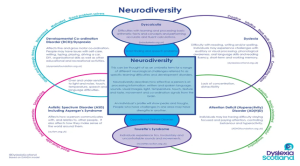
So, let’s get into what ADHD is.
It is a condition which affects a person’s brain, and subsequently, their behaviour. And the way in which it presents is unique to each individual. However, there are three specific types of ADHD. They are as follows:
- Distractibility and Inattentiveness; this results in the person struggling to focus.
- Impulsivity and Hyperactivity; this results in the person being very lively, and often failing to think through the potential consequences of their actions before acting.
- Combined; this results in elements of both of the above types being present.
Particular behaviours associated with ADHD.
Although ADHD presentation differs from person to person, there are certain behaviours that are typical. However, it is important to mention that, due to the uniqueness of presentations, a person who has ADHD will not necessarily display all of the following behaviours. Typical behaviours, and difficulties, include:
- Finding it difficult to remain seated in one place, often fidgeting
- Heightened sensitivity, which can evoke an emotional response
- Struggling to remain focused for long periods of time
- Easily distracted
- Finding organising a challenge, which might lead to missed appointments, or forgetting to complete important tasks
- Finding it hard to wait their turn, which might result in interruptions during conversations
- Very talkative
- Acting on impulse, which can result in things being done, or said, without forethought
- The following of instructions being challenging.

How do the above behaviours impact an ADHD person’s life?
Due to the behaviours mentioned above, navigating each day can be rather frustrating. This might be due to misunderstandings. These misunderstandings might arise from the individual’s mind operating differently to the neurotypical mind, the person with a neurotypical mind not understanding this difference, and vice versa. This can be both confusing and frustrating for ADHD persons.
In order to negate these misunderstandings, an ADHD person might resort to masking. This involves hiding their daily struggles, and the related emotions, in order to “fit in”. This is extremely tiring for the individual. And it often leads to an element of confusion because they are not being themselves (a freedom everyone ought to be afforded). They may also make them feel disconnected from the world around them.
Additionally, whilst the ADHD person is masking, those around them might expect them to complete tasks in the same manner as everyone else. But as it has already been made clear in this blog, their mind does not operate in the same manner as the neurotypical mind. Therefore, it is unlikely that they will be able to complete tasks in the same manner. And this difference coupled with neurotypical expectations, can lead to the individual experiencing negative emotions.
This lack of understanding of difference can impact many areas of an ADHD person’s life, including relationships, where the other person in the relationship might feel that the ADHD person is intentionally failing to focus on what is being discussed, or not tending to something which has been discussed previously. This can lead to further disconnect, as the individual withdraws and starts to feel isolated.
Naturally, all of the above is exhausting for the ADHD person. And this can lead to a lack of self-care. This lack of self-care, coupled with so much misunderstanding can impact their mental health. They might suffer with anxiety, which can lead to depression, and then a lack of ability to regulate their mood.

What can therapy do to help?
Therapy can help the individual to accept their diagnosis, and better understand ADHD. So that instead of masking, they might begin to be themselves, and become more comfortable with who they are, as opposed to bowing to neurotypical norms. This has the potential to increase confidence, and their sense of self.
From this point there are various strategies to help the individual manage the impacts of ADHD. These strategies can help by:
- Talking through current circumstances
- Forward planning with reminders
- Improving communication
- Regulating emotions
- Mindfulness
- Coping mechanisms.
Reference
BACP